Chapter 6: Multicultural & Diverse Literature
Introduction
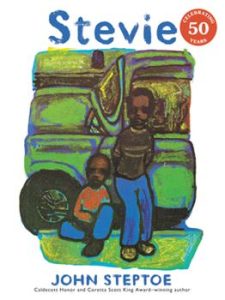
In Brown Girl Dreaming, Jacqueline Woodson (2014) describes the day that she was at the library with her mother and siblings and found the book Stevie by John Steptoe (1969) and wrote about it with these words (pp. 227-228):

“…when I stop in front of the small paperback
with a brown boy on the cover.
Stevie.
…If someone had been fussing with me
to read like my sister, I might have missed
the picture book filled with brown people, more
brown people
than I’d ever seen
in a book before.
…If someone had taken
that book out of my hand
said, You’re too old for this
maybe
I’d never have believed
that someone who looked like me
could be in the pages of the book
that someone who looked like me
had a story.”
Jacqueline Woodson’s memory of what her experiences were before this momentous day in her young life is one that many children in the United States have of not finding books with characters that look like them.
Main Content
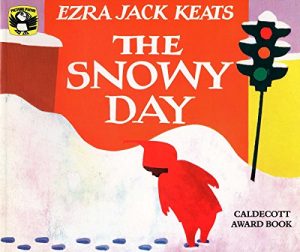
Due to the civil rights movement in the 1960s and the focus on “social inequities and racial injustices,” this trend began to change in 1962 with the publication of The Snowy Day by Jack Ezra Keats and “the first Caldecott Medal book with an African American protagonist” (Short, Lynch-Brown, & Tomlinson, 2018, p. 177). In 1975, Virginia Hamilton was the first author of color to win the Newbery Medal. According to the Cooperative Children’s Book Center from the School of Education at the University of Wisconsin – Madison (CCBC; 2021), in 1985, only 18 books out of 2,500 published in the United States were by Black authors and illustrators. Over the decades, this number has increased so that in 2019, out of the 4,035 books published, the number by Black/African authors increased to 232 and 471 were about Black/African characters. The CCBC website also shares how many books were published by and about Indigenous, Asian, Latinx, Pacific Islander, and Arab people. You can go to this website to see the statistics from 1985 to 2019: Books by and/or about Black, Indigenous and People of Color (All Years).
Why is this so important? As Rudine Sims Bishop originally wrote in 1990,
When children cannot find themselves reflected in the books they read, or when the images they see are distorted, negative, or laughable, they learn a powerful lesson about how they are devalued in the society of which they are a part. (RIF, 2015, p. 1)
 With the entrance of Peter in The Snowy Day, Black children across the U.S. were able to see themselves in a book. Through the concept of mirrors, windows, and sliding glass doors coined by Rudine Sims Bishop in 1990, mirrors reflect the human experience and “…we can see our own lives and experiences as part of the larger human experience” (p. 1). It’s also important for children to be able to look through windows that offer “views of worlds that may be real or imagined, familiar or strange” and go through the sliding glass doors “…to become part of whatever world” (p. 1) the author has created. In an interview with NPR in 2016, Andrea Davis Pinkney shared that “The Snowy Day was her favorite book as a child; she says it brought her comfort to see her own life reflected on the page” (Neary, 2016, n.p.).
To share the creation of Peter, Andrea Davis Pinkney wrote A Poem for Peter (2016) as a biographical narrative poem about the life of the author of The Snowy Day, Jack Ezra Keats. In this book, we learn that Jack Ezra Keats was originally named Jacob Ezra Katz and was the son of Polish immigrants who were Jewish and wanted a better life in America. After World War II, he faced discrimination and changed his name to help him get a job. He found a picture of a little boy in a magazine and saved it for one day when the little boy would become Peter and would inspire children like Andrea Davis Pinkney when she was a little girl.
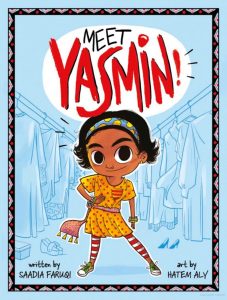
In a conference keynote address in 2019, author Saadia Faruqi, who is Pakistani American, shared an experience she had with her daughter who was in elementary school at the time. Her daughter said she didn’t want to read anymore which puzzled her mother because her daughter was a good reader; after asking more questions, her daughter said that no one looked like her in books. Faruqi decided to write an easy reader with the main character, Yasmin, which turned into the Meet Yasmin! series. In these books, she wanted to show a Pakistani American family in their normal routines. For example, Yasmin’s mother doesn’t wear her hijab at home, but when they go out, her mother puts on her hijab and grabs her purse as they head out the door (Faruqi, 2018). Another example of the importance of the hijab is described in The Proudest Blue: A Story of Hijab and Family by Ibtihaj Muhammad with S.K. Ali and illustrated by Hatem Aly (2019). Asiya gets her first hijab that is the brightest blue to wear on the first day of sixth grade. Her sister, Faizah, thinks she’s walking with a princess with her beautiful hijab. The sisters hear laughing and teasing about the hijab, but Asiya just turns away from it, so Faizah knows that everything is okay and looks forward to when she gets her first-day hijab.

Through the efforts of several organizations, such as We Need Diverse Books (WNDB, 2021) and the CCBC (2021), there has been increased understanding of the need for more diversity in children’s and young adult literature. As defined on the WNDB website, “We recognize all diverse experiences, including (but not limited to) LGBTQIA, Native, people of color, gender diversity, people with disabilities (NOTE: they adopt a broad definition of disability), and ethnic, cultural, and religious minorities” (2021, n.p.). Ezra Jack Keat’s personal story in A Poem for Peter (2016) shares his experiences as a member of a religious minority, sharing the obstacles he faced and how he overcame them. Through diversity in children’s and young adult literature, children will have the opportunity to experience other people’s lives through mirrors, windows, and sliding glass doors (RIF, 2015).
***If you have a book recommendation for this or any chapter in this OER, please complete the Google Form: click this link.
Books
- Faruqi, S. (2018). Yasmin the explorer. Picture Window Books, a Capstone Imprint.
- Keats, J.E. (1962). The Snowy Day. Viking Press.
- Muhammad, I., & Ali, S.K. (2019). The Proudest Blue: A Story of Hijab and Family. Little, Brown and Company.
- Pinkney, A.D. (2016). A Poem for Peter. Viking Press.
- Steptoe, J. (1969). Stevie. HarperCollins Publishers.
- Woodson, J. (2014). Brown girl dreaming. Nancy Paulsen Books.
Additional Information
- Rudine Sims Bishop video on why we need diverse books: https://www.readingrockets.org/teaching/experts/rudine-sims-bishop
- Questions: https://www.teachingforchange.org/selecting-anti-bias-books
- Radicalism of the Snowy Day: https://www.youtube.com/watch?list=PLLxDwKxHx1yI5zfiFpfCQqLH0rWCeMN4W&v=XWdMCec0CLY&feature=youtu.be
- Andrea Davis Pinkney author interviews:
- Diverse books website: https://diversebooks.org/
- Cooperative Children’s Book Center from the School of Education at the University of Wisconsin – Madison website: https://ccbc.education.wisc.edu/